What Is Fascia and Why Is It So Important?
Fascia is a thin but strong connective tissue that forms a continuous web throughout the entire body. It surrounds and connects muscles, organs, nerves, and blood vessels, giving the body structure, support, and the ability to move smoothly.
You can imagine fascia as a three-dimensional internal suit that holds everything in place while still allowing freedom of movement.
⸻
Fascia: More Than Just “Wrapping”
For a long time, fascia was considered passive tissue — simply something that “wraps” muscles. Modern research shows that fascia is active, sensitive, and deeply involved in how we move, feel, and experience pain.
Fascia:
• Transmits movement and force through the body
• Allows muscles to slide freely
• Supports posture and balance
• Stores and releases elastic energy
• Plays a role in circulation and lymphatic flow
• Is richly supplied with nerves and sensory receptors
This means fascia strongly influences mobility, flexibility, coordination, and pain levels.
⸻
Types of Fascia in the Body
1. Superficial Fascia
Located just beneath the skin, this layer contains connective tissue and fat. It:
• Shapes the body
• Cushions and protects tissues
• Allows the skin to glide smoothly
• Stores water and fat
2. Deep Fascia
This is a dense, strong layer that surrounds muscles and separates them into compartments. Deep fascia:
• Maintains muscle organization
• Transmits force between muscles and joints
• Helps coordinate movement
• Plays a major role in posture and stability
3. Visceral Fascia
This fascia surrounds and supports internal organs, allowing them to move naturally while staying in place. Healthy visceral fascia is essential for:
• Proper organ function
• Comfortable breathing
• Natural movement of the internal systems
⸻
Fascia and Pain
Healthy fascia is hydrated, elastic, and able to glide.
When fascia becomes:
• dehydrated
• overstressed
• inflamed
• restricted by trauma, surgery, stress, or repetitive posture
it can lose its ability to move freely.
This may lead to:
• stiffness
• limited mobility
• chronic tension
• myofascial pain
• lower back, neck, and shoulder discomfort
Because fascia connects everything, tension in one area can create pain in another.
⸻
Fascia as a Whole-Body Network
Modern anatomy views fascia as a continuous system, not separate parts. Tension spreads through this network much like in a tensegrity structure, where balance and stability depend on evenly distributed forces.
This explains why working with fascia can create:
• full-body release
• improved posture
• deeper and longer-lasting results than muscle-only work
⸻
Why Fascia Work Matters in Massage Therapy
At Kaya Therapies, fascia is not treated as an afterthought — it is central to the work.
Fascial release techniques aim to:
• restore glide and elasticity
• reduce chronic holding patterns
• improve circulation and nervous system regulation
• support natural movement and alignment
Unlike fast or aggressive techniques, fascia responds best to slow, mindful, and intentional touch, allowing the tissue and nervous system to reorganize naturally.
⸻
Fascia, Emotions, and the Nervous System
Fascia is closely connected to the nervous system and contains many sensory receptors. This is why fascial work can support:
• deep relaxation
• emotional release
• improved body awareness
• stress reduction
Many clients notice not only physical changes, but also a sense of mental clarity and emotional balance after fascial work.
⸻
In Summary
Fascia is:
• everywhere in the body
• essential for movement and stability
• deeply connected to pain, posture, and emotions
Supporting fascial health helps the body move better, feel lighter, and function more efficiently.
If you experience chronic tension, restricted movement, or stress held in the body, fascial-focused therapy can be a powerful path to relief and balance.

The Future of Fascia Care
The Future of Fascia Care: A Consciousness-First Approach at Kaya Massage Therapy
Over the past decade, fascia research has taken a massive leap forward. What was once seen as “just connective tissue” is now understood as one of the most intelligent, adaptive, and environmentally responsive systems in the human body.
At Kaya Massage Therapy, we integrate this new science into a fascia-first approach that upgrades the way your entire body heals, moves, and performs.
Fascia: A Sensory, Intelligent Network
Today’s science views fascia as a living web that responds to much more than pressure and stretch. It shifts based on:
• vibration and sound
• light and bioelectric flow
• hormonal rhythms
• internal emotional states
• circadian and seasonal cycles
• levels of stress or coherence in the nervous system
This means fascia work is no longer about force. It’s about tuning the body to the right signals.
1. Consciousness-First Bodywork
Where fascia work begins with the mind, not the muscle
The fascial matrix functions as a sensory and perceptual interface — it changes its tension, conductivity, and hydration depending on your state of consciousness.
Core idea:
Before the body can reorganize, the mind must downshift.
How we apply this at Kaya Massage Therapy:
• Guided interoceptive scanning to activate deep fascial layers
• Conscious breathwork that reduces global tension
• Nervous-system down-regulation for better tissue hydration
• Fascia mapping based on subtle internal sensations, not just anatomical pressure points
When the mind is aligned, fascia becomes fluid and reorganizes naturally.
2. Gender-Specific Fascia Work
Because fascia is hormone-dependent
Hormones directly change fascia’s elasticity, density, and recovery speed.
Traditional massage ignores this, but modern fascia work cannot.
Core idea:
Techniques must match hormonal patterns — especially for women.
At Kaya Massage Therapy:
• Cycle-based fascia protocols for each menstrual phase
• Techniques that support low-testosterone patterns in men
• Hormone-aware recovery sessions when the tissue is more vulnerable
This creates safer, faster, and more predictable results.
3. Planetary & Environmental Alignment
Fascia shifts with circadian, seasonal, and environmental rhythms
Fascia is a water-rich, oscillating system. Light cycles, temperature, humidity, and even geomagnetic changes influence its viscosity and collagen turnover.
Core idea:
To support fascia, you must work with natural rhythms — not against them.
Our seasonal fascia approach includes:
• Seasonal mobility and recovery protocols
• Circadian-aligned massage timing (energizing daytime vs calming evening work)
• Chronobiological tracking for clients under stress, jet-lag, or sleep disruption
Your fascia adapts more easily when your environment and biology are synchronized.
4. Frequency-Based Fascia Therapies
From force → to vibration, sound, and microcurrent
Emerging research shows fascia responds more powerfully to frequency than to mechanical pressure. Vibrations reorganize collagen structure, improve hydration, and modulate pain signaling.
Core idea:
Tune fascia through vibrational input rather than deep force.
At Kaya Massage Therapy, this includes:
• Vibrational sound tools
• Subtle-energy fascia mapping
• Microcurrent or bioelectric-supportive techniques
• Trigger-zone release through vibration rather than compression
This approach reduces pain, increases mobility, and speeds recovery without overstimulating sensitive tissues.
The Kaya Fascia-First Method
Our approach unites all four dimensions:
✔ Consciousness-first
We downshift the nervous system to unlock deeper layers.
✔ Hormone-informed
We adapt your session to your biological rhythm.
✔ Planet-aligned
We work with environmental cycles to optimize tissue fluidity.
✔ Frequency-based
We restructure fascia through vibration, sound, and microcurrent.
This isn’t traditional massage.
It’s a full-system recalibration designed around how fascia actually behaves.
Why It Matters
When fascia receives the signals it’s designed for, the body reorganizes toward coherence, not compensation.
Clients experience:
• reduced chronic tension
• better joint mobility
• improved posture and movement efficiency
• calmer nervous system
• faster recovery
• decreased inflammation
• ease of breath and greater energy
This is future medicine — fascia as the missing link between consciousness, hormones, the environment, and physical vitality.
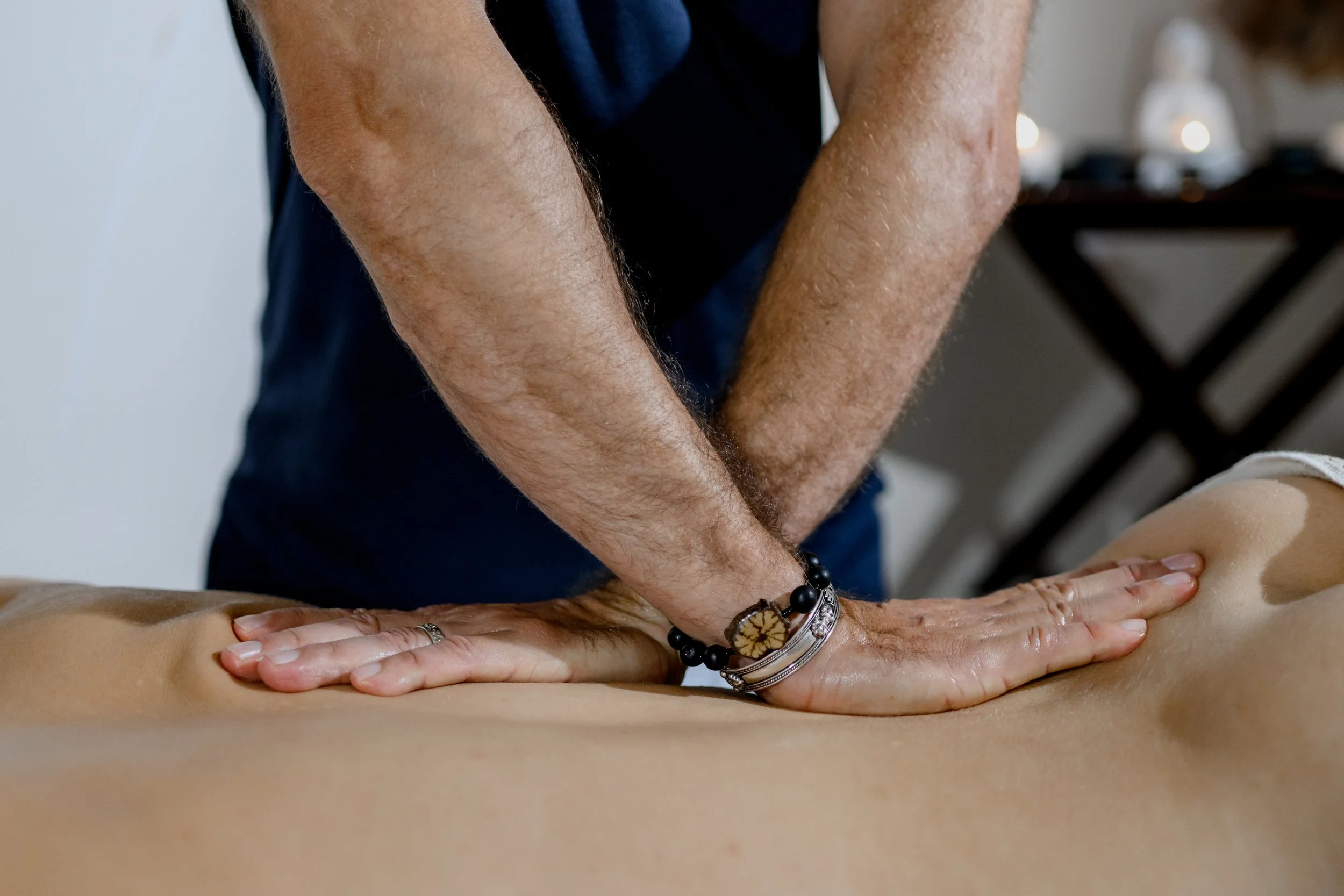
Reconnection
Reconnection
Massage serves as a powerful tool for self-connection, allowing individuals to tune into their bodies and release built-up tension. Through the gentle manipulation of muscles, it fosters a deep sense of relaxation and mindfulness, encouraging a heightened awareness of one's physical and emotional state.
This nurturing touch creates a space for introspection, enabling individuals to explore their feelings and restore a sense of balance. Ultimately, massage can help bridge the gap between the mind and body, promoting a holistic sense of well-being and self-acceptance.
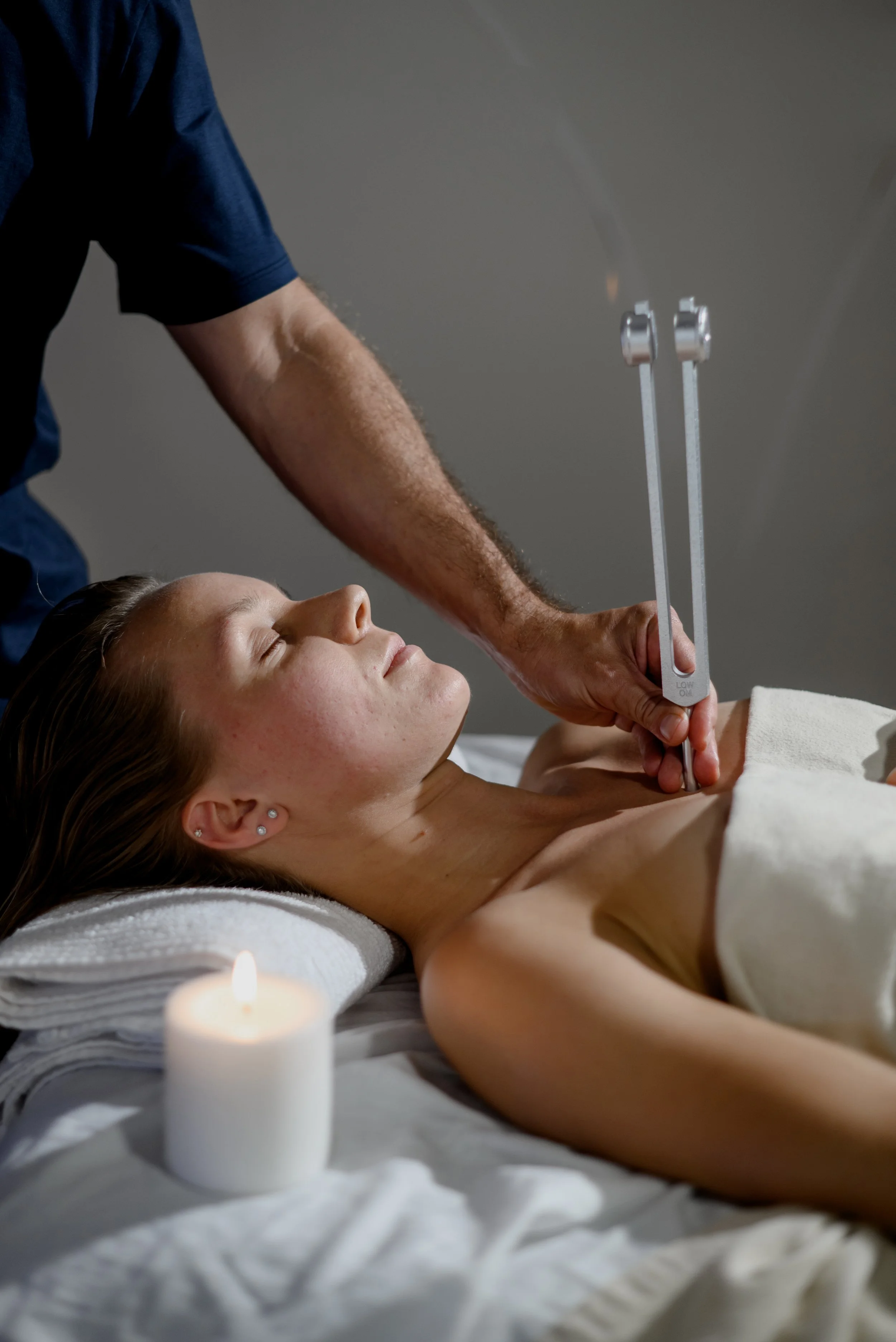
Healing by Sound
Sound therapy uses vibration to restore balance in your body—like tuning an instrument. It supports emotional release, physical wellness, deep relaxation, and improved energy flow. Let sound guide you to a more peaceful and aligned state.
Reconnect. Realign. Remember your natural rhythm.
At Kaya Therapies, we believe true healing happens when the body, mind, and spirit are in harmony—and sound is one of the most powerful tools to help guide you there.
Everything in the universe is vibration. Each organ, each cell, every emotion—everything carries its own unique frequency. When life throws us off balance—through stress, trauma, illness, or emotional overwhelm—our inner vibrations can become “out of tune,” leaving us feeling disconnected or unwell.
Sound therapy gently restores this balance. Using tools like tuning forks, sound bowls, and sacred frequencies, we work with your body’s energy field to help realign and reawaken your natural state of flow. It’s like giving your entire system a soulful retuning.
✨ What Sound Therapy Can Support:
• Emotional Healing: Melt away stored tension, old grief, and energetic blocks that weigh on your heart.
• Physical Wellness: Support the healthy function of your organs and nervous system through vibrational harmony.
• Deep Relaxation: Enter a meditative state of peace that soothes the body and stills the mind.
• Clear Energy Pathways: Free up stuck or stagnant Chi (life force) to restore clarity, vitality, and inner ease.
• Enhanced Focus and Creativity: Feel lighter, clearer, and more present in your day-to-day life.
This is more than just sound—it’s a journey inward. A space to realign with your deeper self. Each session is tailored intuitively to your needs, creating a safe and sacred container for transformation.
Let the healing frequencies of sound be your guide—bringing you back to wholeness, one vibration at a time.
You don’t have to do anything but receive. Just breathe, listen, and allow the tones to carry you home.